
FY2026 eLearning Trends - practical tips for smarter online training design

Corporate learning is an ever-changing world. With organisations moving with the new trends of hybrid workplaces, digital transformation, and ongoing skills development, the manner in which training programs are developed also has to be changed. In FY2026, the corporate eLearning trends are defining smarter learning interactions that will enable organisations to train their employees in a more productive and efficient manner, as well as remain aligned with the changing workplace demands.
In our organisation, we aim at the development of effective training strategies that are in line with business objectives and employee learning requirements. The practice will render the training programs to be relevant, interactive and accessible to organisations in order to deliver learning experiences that can improve the relevant skills and enable sustainable growth of the workforce.
The Role of AI in eLearning
AI in eLearning is one of the most revolutionary in the field of modern training. Artificial intelligence allows the learning platforms to evaluate the performance of employees, detect instances of skills shortages, and provide targeted training.
Online training design is used to improve by offering:
- Smart course suggestions
- On-demand performance reporting
- Automated content updates
- Interactive learning simulations
- Immediate feedback and instructions
The same AI-driven systems can also make learning journeys more personal to each employee of the organisation, using employee performance and roles data, so that learners have access to relevant training at the right time.
Personalised Learning in eLearning
The other significant change that influences corporate eLearning trends is personalised learning in eLearning. Conventional training programs tend to provide the same training to all employees, irrespective of their experience or position.
Under personalised learning, we would design programs that match the needs of the individual learners.
Key features include:
- Adaptive learning pathways
- Skill-based course recommendations
- Role-specific training modules
- Performance-based assessments
- Custom learning dashboards
This method enhances engagement in the sense that the employees are being trained in a way that will be of direct benefit in their professional growth.
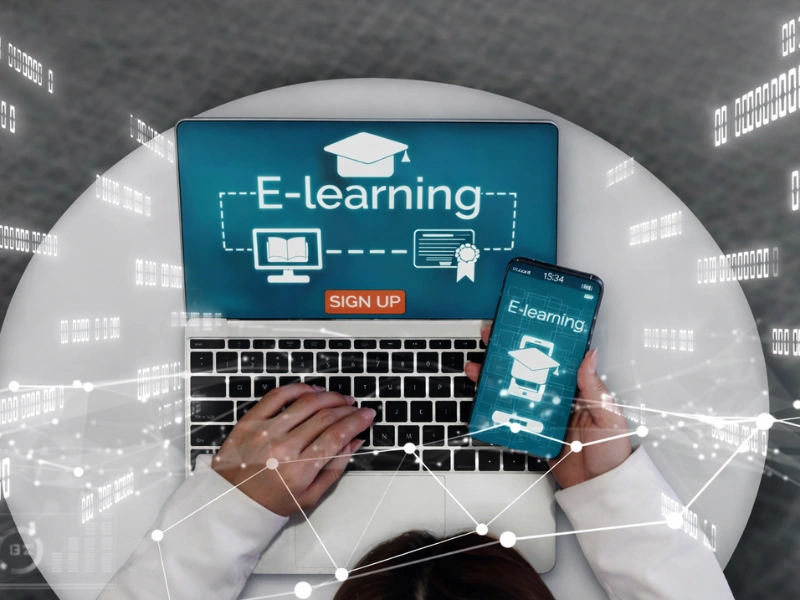
Corporate Training Microlearning
Microlearning for corporate training is one of the most viable approaches in contemporary training. Microlearning does not need long courses, but it causes information to be presented in short, intensive lessons, which the employees can pass in a short time.
Microlearning has the following advantages:
- Faster knowledge retention
- Higher learner engagement
- Simple assimilation with everyday job activities
- Greater support for mobile learning
- Ongoing skill acquisition
Quick videos, simulations, or scenario-based exercises are examples of short learning modules accessible to employees to learn precisely what they require without interfering with productivity.
Mobile-First Online Training Design
The advent of remote and hybrid working has made mobile learning a necessity in the contemporary training approach.
When we come up with online training design solutions, we make them compatible across devices. Learning that is mobile-friendly enables the employees to undertake their training anywhere at anytime be it when working outside, travelling or between assignments.
Best practices in mobile learning are:
- Short and focused content
- Clear visual layouts
- Tap-friendly interactions
- Simple navigation
- Cross-platform testing
Mobile-based training design enhances accessibility and persuades employees to use the learning material more regularly.
Developing Smarter Company Training Strategies
In order to remain competitive, organisations have to adapt to the current corporate eLearning trends and implement training strategies that resonate with the changing workforce requirements.
Among the strategies that we concentrate on to develop effective learning solutions, we have:
- Data-driven training through the integration of AI in eLearning
- Application of role specific development through personalised learning in eLearning
- Microlearning for corporate training to enhance interaction
- Creating mobile-friendly training environments
- Assessing learning performance with analytics
Through these strategies, we can develop training experience that is interesting, scalable and consistent with actual business results.
Conclusion
The future of corporate training is in smarter and more adaptive learning experiences. By investing in current online training design organisations can enhance stronger teams in addition to facilitating continuous learning and professional development.
The adoption of modern learning technologies and new training methodologies will enable us to develop effective, and meaningful programs. With the ever-changing nature of workplace learning, organisations with resourceful training approaches will be in a better position to develop skills, enhance employee performance, and even stay competitive in the digital workplace.

Frequently Asked Questions(FAQs)
Q1. What is online training design in corporate learning?
Online training design is the process of developing structured online learning programs for staff members in the form of eLearning programs on eLearning platforms, multimedia learning materials and interactive learning programs.
Q2. What is the significance of corporate eLearning trends to organisations?
Trends in corporate eLearning assist organisations to embrace the latest trends in training which enhance learning, skills of employees and overall the productivity of the workforce.
Q3. What does AI do to enhance corporate training?
Training is more effective and focused on the individual by using AI to analyse the performance of the employees, suggest appropriate courses, customise study paths, and give feedback in real time.
Q4. What is eLearning personalised learning?
Personalised learning will be used to tailor training materials depending on the position of the employee, level of skill and learning advancement and each employee will get relevant and effective training.
Q5. What is the effectiveness of microlearning in corporate training?
Microlearning provides brief, intensive learning bits that employees can easily absorb within a relatively short period, enhancing knowledge retention and simplifying training processes by accommodating into a hectic working routine.